

In the current era, the state has issued a strong call for the new energy industry, charting a new direction for corporate development. Shenghong is actively responding to national policies with keen market insight and a pioneering spirit of innovation. We have decided to fully commit to the new energy industry and officially enter the automotive fasteners project. As the future trend in the transportation sector, new energy vehicles hold immense market potential. Automotive fasteners, being indispensable and critical components in vehicle manufacturing, are of paramount importance. We understand that only by keeping pace with national industrial development can we remain invincible in the fiercely competitive market. Shenghong has clear plans and firm determination in entering the automotive fasteners project. We will invest significant resources in technological research and development, striving to create high-quality, high-performance automotive fasteners. With advanced production equipment and a stringent quality control system, we ensure that every fastener meets the high standards of the automotive industry. At the same time, we will actively collaborate with automotive manufacturers and related industrial chain enterprises to jointly promote the development of the new energy vehicle industry. Guided by customer needs, we will continuously optimize product design and services, providing customers with one-stop solutions. Looking ahead, we are confident. With the support of national policies and the collective efforts of all Shenghong employees, we are poised to achieve excellence in the field of new energy vehicle fasteners and contribute to the development of the national new energy industry.
More...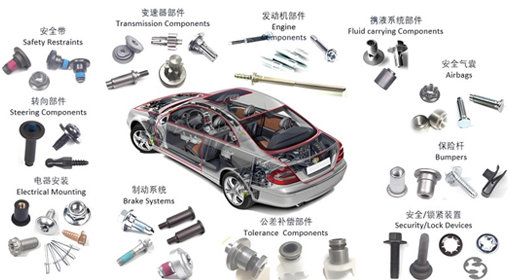
Fasteners play a crucial role in automotive manufacturing. As essential components for connecting and securing various parts, fasteners not only affect the structural strength and stability of a vehicle but also have a direct impact on its safety, durability, and production efficiency. With the advancement of the automotive industry and technology, the requirements for fasteners have become increasingly stringent. From simple bolts and nuts in the early days to today’s high-performance materials and precision machining technologies, the evolution of fasteners has accompanied the continuous progress of the automotive industry. The automotive manufacturing process requires a large number of fasteners, which are involved in various parts of the vehicle, including the body, chassis, engine, and interior. Different areas have different requirements for fasteners, so factors such as performance, material, strength, and corrosion resistance must be carefully considered when selecting and using fasteners. Data Analysis of Fasteners in Automotive Manufacturing The quantity and quality of fasteners used directly impact the cost, efficiency, and quality of automotive manufacturing. Through data analysis, the usage of fasteners can be effectively monitored and optimized, thereby improving production efficiency and reducing manufacturing costs. Data Analysis of Fastener Consumption In automotive manufacturing, the consumption of fasteners is a critical metric. By collecting and analyzing fastener usage data across different vehicle models and production lines, patterns in fastener demand for various types of vehicles can be identified. For example, due to the unique body structure and chassis system of SUV models, they typically require more high-strength fasteners compared to sedans.
More...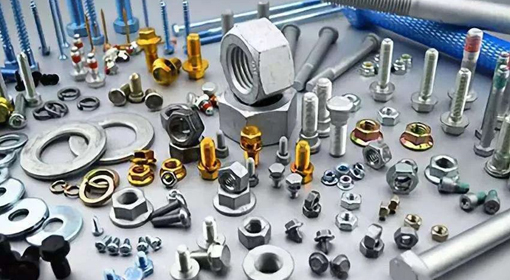
Stainless steel standard fasteners are a category of universal connecting components made from stainless steel, known for their corrosion resistance and durability. They are commonly used in precision machinery or valuable equipment. Encompassing 12 main categories, including bolts, studs, screws, nuts, etc., they achieve removable or permanent connections through threads or other joining methods and are widely applied across industrial fields. The materials for such fasteners primarily include austenitic, martensitic, or ferritic stainless steels. Material selection requires comprehensive consideration of factors such as mechanical strength, corrosion resistance, and machinability. Production adheres to domestic and international standards like China's GB and the international ISO, which specify technical requirements for dimensions, mechanical properties, surface treatment, and more. Stainless steel standard fasteners typically include the following 12 categories of parts: 1.Bolts: A type of fastener consisting of a head and a shank (a cylinder with external threads). They are used in conjunction with nuts to securely join two parts with through-holes. This connection method is called a bolted joint. If the nut is unscrewed from the bolt, the two parts can be separated, making a bolted joint a removable connection. 2.Studs: A type of fastener without a head, having external threads on both ends. During assembly, one end is screwed into a part with a tapped (internal threaded) hole, while the other end passes through a part with a through-hole, after which a nut is screwed on to fasten the two parts together as a single unit. This connection method is called a studded joint, also a removable connection. It is mainly used when one of the parts to be joined is too thick, requires a compact structure, or when frequent disassembly makes bolted joints unsuitable. 3.Screws: Also a type of fastener consisting of a head and a shank. They can be classified by purpose into three categories: machine screws, set screws, and screws for special purposes. Machine screws are primarily used to fasten a part with a tapped hole to a part with a through-hole, without requiring a nut (this connection is called a screwed joint and is also removable; they can also be used with a nut for joining two parts with through-holes). Set screws are mainly used to fix the relative position between two parts. Screws for special purposes include items like eye bolts for hoisting components. 4.Stainless Steel Nuts: Components with an internal threaded hole, generally in the shape of a flattened hexagonal prism, though sometimes a flattened square or cylindrical shape. Used in conjunction with bolts, studs, or machine screws to fasten two parts together into a single unit. 5.Tapping Screws: Similar to machine screws, but the thread on the shank is a special thread designed for tapping screws. Used to fasten two thin metal components together. The components require pre-drilled pilot holes. Due to their high hardness, these screws can be directly driven into the holes of the components, forming corresponding internal threads. This connection is also removable. 6.Wood Screws: Also similar to machine screws, but the thread on the shank is a special thread for wood screws. They can be directly screwed into wooden components (or parts) to fasten a metal (or non-metal) part with a through-hole to a wooden component. This connection is also removable. 7.Washers: A type of fastener shaped like a flat ring. Placed between the bearing surface of a bolt, screw, or nut and the surface of the connected part, they serve to increase the contact surface area, reduce unit pressure, and protect the surface of the connected part from damage. Another type, elastic washers, also helps prevent nuts from loosening. 8.Retaining Rings (Circlips):Designed to be fitted into the shaft grooves or housing bores of machinery and equipment, preventing axial movement of parts on the shaft or within the bore. 9.Pins: Primarily used for part positioning. Some types can also be used for part connection, securing parts, transmitting power, or locking other fasteners. 10.Rivets:A type of fastener consisting of a head and a shank. Used to permanently fasten two parts (or components) with through-holes together into a single unit. This connection method is called a riveted joint, or riveting. It is a non-removable (permanent) connection because separating the two joined parts requires destroying the rivet in the parts. 11.Assemblies and Fastener Pairs: An assembly refers to a set of fasteners supplied as a combined unit, such as a specific machine screw (or bolt, tapping screw) supplied with a flat washer (or spring washer, lock washer). A fastener pair refers to a specific set comprising a specialized bolt, nut, and washer supplied together, such as a high-strength hexagon bolt pair for steel structures. 12.Weld Studs: A specialized type of fastener consisting of a welded end and a head (or sometimes headless). They are fixed to a part (or component) by welding, enabling subsequent connection with other stainless steel standard fastener parts.
More...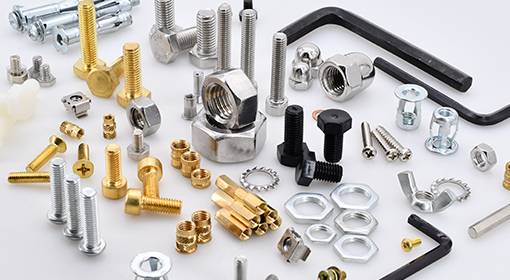
Fasteners are made from a wide variety of materials, with the selection depending on the application's requirements for strength, corrosion resistance, temperature tolerance, weight, cost, and electrical conductivity. The main categories and typical materials are as follows: I. Ferrous Materials (Most Common) This is the most widely used category, accounting for over 80% of the fastener market. 1. Carbon Steel Low Carbon Steel:e.g., Q235 (A3 steel), SWRCH10A/18A (wire rod). Offers lower strength but good plasticity. Used for general-purpose, low-strength fasteners. Medium Carbon Steel: e.g., Grade 35, Grade 45 steel. Can achieve good comprehensive mechanical properties after heat treatment (quenching and tempering). Used for medium-strength bolts and nuts. Alloy Steel / Medium Carbon Alloy Steel:e.g., 35CrMo, 42CrMo, SCM435, 40Cr. The addition of elements like chromium and molybdenum significantly enhances strength, toughness, and hardenability. Used for high-strength fasteners in critical applications like automotive engines and construction machinery. Boron Steel:e.g., 10B21, 10B33. Contains trace amounts of boron to improve hardenability at a relatively low cost. Widely used for automotive bolts. 2. Stainless Steel Austenitic Stainless Steel: The most common type; non-magnetic with excellent corrosion resistance. A2 (304): General-purpose, resistant to atmospheric corrosion. A4 (316): Contains molybdenum, resistant to corrosion from acids, alkalis, and chlorides ("marine grade"). Martensitic Stainless Steel: e.g., 410, 420. Can be strengthened by heat treatment, offering higher strength but lower corrosion resistance than austenitic steels. Some grades are magnetic. Ferritic Stainless Steel: e.g., 430. Offers moderate corrosion resistance, mainly used for decorative purposes or in general environments. II. Non-Ferrous Materials 1. Copper and Copper Alloys Brass:Aesthetically pleasing with good electrical conductivity. Used in electronics, decorative applications, and low-strength corrosion-resistant situations. Bronze:Wear-resistant, used for special bearings or components resistant to seawater corrosion. Pure Copper:Excellent electrical conductivity, used for electrical connections. 2.Aluminum and Aluminum Alloys Advantages: Lightweight (approx. 1/3 the density of steel), resistant to atmospheric corrosion (forms a protective oxide layer), good thermal and electrical conductivity. Grades: e.g., 5052, 6061, 7075 (high-strength aerospace aluminum). Applications: Aerospace, electronic equipment, lightweight structures. III. High-Temperature / Special Alloys Used in extreme environments. 1. Nickel-Based Alloys: e.g., Inconel 600/718, Monel 400/K500. Offer exceptional high-temperature resistance and corrosion resistance (to acids, alkalis, seawater). Used in aerospace, chemical, and marine engineering. 2. Titanium and Titanium Alloys:e.g., TC4 (Ti-6Al-4V). Feature very high strength-to-weight ratio, are lightweight, offer excellent corrosion resistance and good biocompatibility. Used in aerospace, medical implants, and high-performance racing. Cost is high. IV. Other Materials 1. Plastics / Polymers:e.g., Nylon (PA6, PA66), Polypropylene (PP), Polyetheretherketone (PEEK). Provide insulation, are lightweight, chemically resistant, and non-magnetic, but have lower strength. Used in electronics, food/medical industries, and corrosive environments. 2. Special Materials and Coatings: Base materials can undergo surface treatments to enhance performance. Examples include zinc plating, Dacromet coating, hot-dip galvanizing, and phosphating to improve rust resistance; carburizing/nitriding to increase surface hardness. Composite material fasteners are also under development.
More...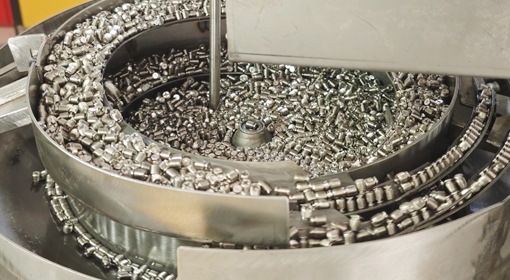


Follow us

Address:
No. 3 Liansheng Industrial Road, Shunde District, Foshan City

Service hotline: +86 137 2635 9555 (Mr. Jiang)

Technical Support: +86 137 2494 3233 (Mr. Chen)
Copyright ? 2025 Shenghong Metal Products Co., Ltd., All rights reserved